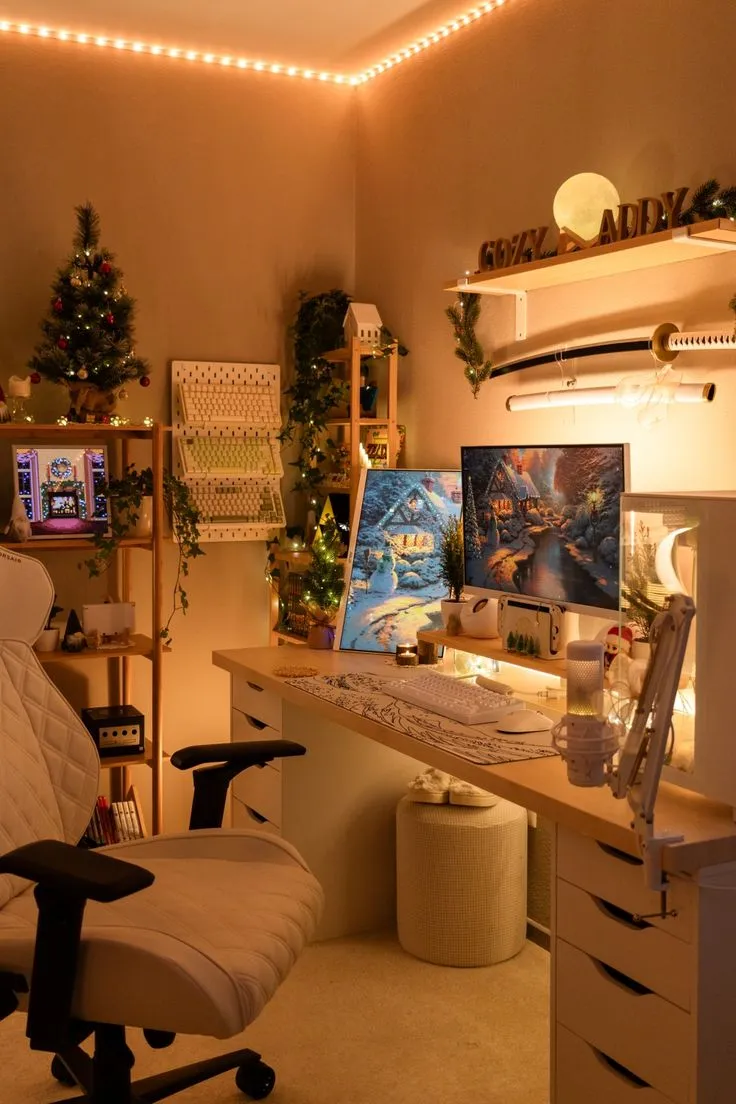
Putting Down the Grind: How Cozy Games Are Saving Us From Winter Burnout One Slow Day at a Time
Photo: Shixart1985, CC BY 2.0, via Wikimedia Commons
Somewhere between your third cup of coffee and your fourteenth browser tab, winter stops feeling cozy and starts feeling like a trap. The days are short. Your to-do list is not. And somehow, despite the cultural mythology of hygge and hot cocoa, January has a sneaky way of becoming the most exhausting month of the year.
This is the part where a lot of us reach for our phones and start doomscrolling. But a growing number of people are reaching for a controller instead — and loading up something slow, gentle, and completely devoid of a kill count.
Cozy games. You've heard of them. Maybe you've played them. But what's actually happening when someone chooses to spend a Sunday afternoon watering virtual crops instead of optimizing their morning routine? Turns out, quite a lot.
The Burnout Boom Nobody Wants to Talk About
Burnout isn't a new concept, but the conversation around it has exploded in the last few years. The American Psychological Association has consistently flagged work-related stress as a national crisis, and winter tends to crank everything up a notch. Reduced sunlight messes with serotonin levels. Social calendars collapse. And for a culture wired to equate rest with laziness, the pressure to "use" the downtime productively can feel suffocating.
Therapists have started noticing a pattern. Clients who once described their evenings as doom-scrolling spirals or anxiety-fueled Netflix binges are increasingly mentioning games like Stardew Valley, Cozy Grove, and Disney Dreamlight Valley as part of their wind-down routines — not as guilty pleasures, but as something that actually helps.
"There's a concept in psychology called 'soft fascination,'" explains the kind of thinking you'd hear from a mindfulness-focused therapist. "It's the idea that some activities gently hold your attention without demanding it. Walking in nature is a classic example. Cozy games seem to trigger something similar — they keep your mind just occupied enough to step out of the anxiety loop, without adding cognitive load."
That's a meaningful distinction. Cozy games don't ask you to react fast, win, or optimize. They ask you to show up, putter around, and leave when you feel like it. For brains that have been running hot since, oh, roughly 2020, that's not a small thing.
Why Winter Makes It Hit Different
There's a reason the cozy game wave crests hardest in winter. It's not just about cold weather giving people an excuse to stay inside (though, honestly, valid). It's about the emotional texture of the season.
Winter in America carries a weird double standard. We romanticize it — the snow, the fireplaces, the slow mornings — while simultaneously treating it as prime time for self-improvement. January is resolution season. February is "you should be further along by now" season. The aesthetic of winter rest exists in direct tension with a culture that treats stillness as a character flaw.
Cozy games slip right into that gap. They look like rest. They feel like rest. But they also give your brain just enough structure to feel okay about not being productive. You're not doing nothing — you're building a little farm, decorating a house, making friends with cartoon villagers. It's permission to be slow without feeling guilty about it.
Game designers who work in the cozy space have talked openly about this dynamic. The genre's signature mechanics — no fail states, no time pressure, optional objectives — aren't accidental. They're a deliberate philosophical stance. When you design a game where nothing bad happens if you walk away, you're making a statement about what games can be. And, maybe, about what rest can look like.
The Anti-Optimization Game
Here's what's genuinely interesting about the cozy game movement from a cultural standpoint: it's not just a genre preference. It's starting to look like a rejection.
For the last decade, gaming culture has been deeply infected by optimization thinking. Min-maxing stats, speed-running, achievement hunting — even in casual games, there's often an undercurrent of "how do I do this most efficiently?" That mindset didn't come from nowhere. It mirrors the hustle culture logic that has dominated American work and social life: everything is a system to be gamed, every moment a resource to be maximized.
Cozy games don't play by those rules. And increasingly, players are choosing them specifically because they don't. Reddit threads and Discord servers dedicated to games like Spiritfarer and A Short Hike are full of people explicitly describing their choice as a pushback — against competitive gaming, against productivity apps, against the feeling that leisure time needs to produce something.
"I used to track my gaming hours and feel bad if I wasn't 'making progress,'" one player wrote in a community thread that got thousands of upvotes. "Now I just... fish. And it's the first time gaming has felt like actual rest in years."
That sentiment shows up again and again. Cozy games have become, for a lot of players, a way of practicing something they struggle to do in real life: being okay with enough.
Not Escapism — Something More Like Practice
It's tempting to frame cozy gaming as pure escapism, a way to check out from a world that's too much. But that framing undersells what's actually happening.
Mental health professionals who study leisure and recovery make an important distinction between detachment and recovery. Detachment is numbing — scrolling, zoning out, consuming without engaging. Recovery is active but low-effort engagement that restores your mental and emotional resources. Cozy games, done intentionally, seem to function more like recovery than detachment.
There's also something worth noting about the emotional content of these games. Spiritfarer deals with grief. Cozy Grove is literally about helping ghosts process their unfinished business. Unpacking tells an entire life story through the act of arranging belongings. These aren't empty experiences. They invite reflection, even tenderness, without forcing it.
For people navigating winter blues, seasonal affective disorder, or just the ambient exhaustion of modern American life, that kind of gentle emotional engagement can be genuinely therapeutic.
The Bigger Picture
The cozy game boom isn't happening in a vacuum. It's part of a broader cultural reckoning with what we owe our own nervous systems. The same energy that's driving interest in slow living, the "lying flat" movement, and the pushback against girlboss hustle culture is showing up in gaming — just with better pixel art.
What cozy games offer, at their best, is a kind of proof of concept. That it's possible to spend time without producing something. That a game can be worth playing even if you never finish it. That winter — dark, slow, quiet winter — might actually be trying to tell us something we've been too busy to hear.
Here at SnowCait, we've always thought winter deserved a little more credit. Maybe the cozy game revolution is finally giving it some.
So the next time someone asks what you did this weekend and you have to explain that you spent three hours deciding where to put a mailbox in Animal Crossing, don't apologize. You were recovering. And that counts.