Hundreds of Hours, Zero Stakes: The Surprising Science Behind Cozy Game Addiction

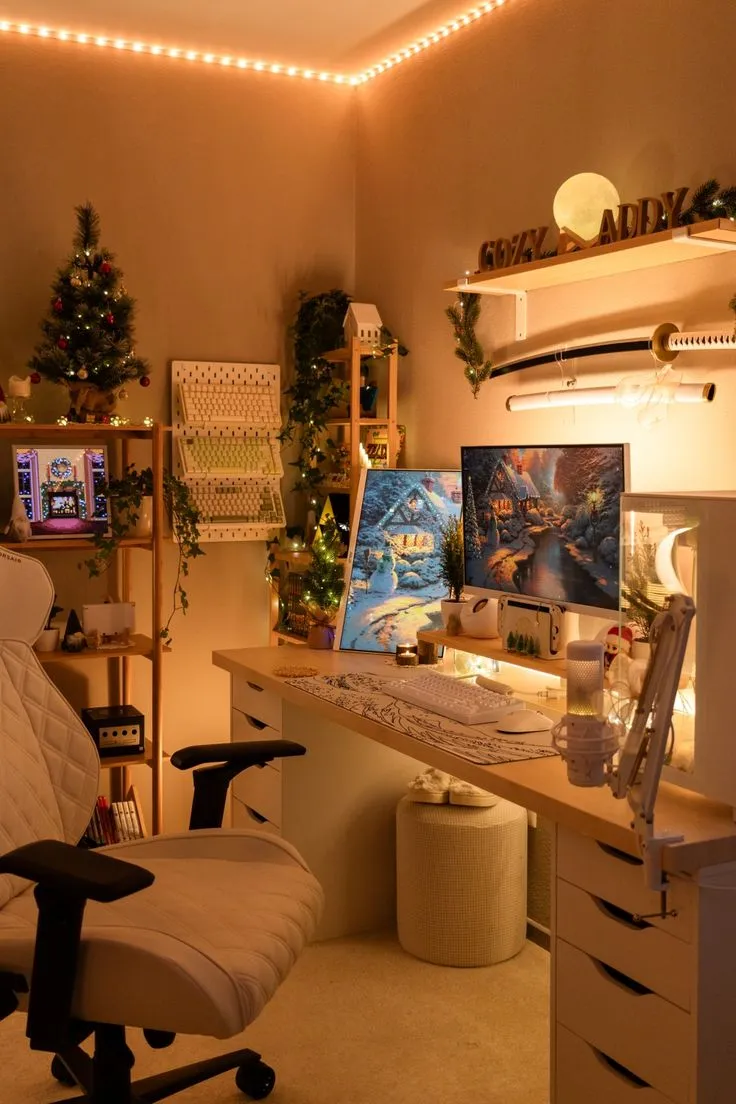
Photo: cozy winter gaming setup warm blanket laptop controller soft lighting, via i.pinimg.com
Let's be honest with each other for a second. You've probably opened a cozy game fully intending to play for twenty minutes before bed, only to surface three hours later, slightly dazed, with a weirdly organized virtual pantry and zero regrets. It happens to the best of us here at SnowCait. But have you ever stopped mid-fishing-minigame to wonder why? Why are games built around the most mundane tasks — watering plants, decorating a cottage, chatting with anthropomorphic villagers — somehow more gripping than action titles with explosions and world-ending stakes?
Spoiler: your brain is doing something really interesting, and winter makes the whole thing even more intense.
The Dopamine Loop You Didn't See Coming
Here's the thing about traditional high-action games: they're built around spikes. Big boss fight, huge reward, adrenaline rush — your brain gets a jolt, then comes down, then craves another jolt. It's exciting, but it's also exhausting. Cozy games work on an entirely different neurological rhythm.
Rather than spikes, they deliver what psychologists sometimes call a steady drip of low-level dopamine. Every time you complete a small task — harvesting a row of strawberries, shipping a bundle of goods, unlocking a new furniture item — your brain registers a tiny win. These micro-rewards stack up constantly, and because they're so frequent and so low-pressure, your nervous system never really has to brace for impact. You stay in a kind of pleasurable flow state almost indefinitely.
Game designers who work in the cozy space talk about this a lot. The goal isn't to challenge you into submission — it's to keep you comfortable enough that you never want to stop. There's a reason Stardew Valley lets you water your crops even on days when nothing else is happening. The act itself is the reward.
Predictability Is a Feature, Not a Bug
One of the most counterintuitive things about cozy games is how much players love knowing exactly what's coming. In a world that feels increasingly chaotic — news cycles, work stress, the general unpredictability of adult life in America in the 2020s — there's something profoundly comforting about a game that promises you the same gentle sunrise every morning, the same friendly NPC dialogue on Tuesdays, the same seasonal festival on the same date every year.
Psychologists who study comfort behavior point out that humans are wired to find relief in patterns. When anxiety is high, we seek environments where outcomes are predictable and controllable. Cozy games are almost engineered to deliver exactly that. You know your crops will grow if you water them. You know the shopkeeper will be there at 9 AM. Nobody is going to ambush you, flip the rules, or punish you for playing slowly.
This is why so many players describe cozy games as genuinely therapeutic rather than just entertaining. They're not escaping into fantasy — they're escaping into order.
The Resource Management Trick Your Brain Falls For Every Time
Here's where it gets really sneaky. Even the most laid-back cozy games tend to build in some version of resource management — energy meters, seasonal crop windows, limited inventory space, crafting queues. And while none of these systems are punishing, they are engaging your planning brain in a very specific way.
Managing resources, even fictional ones, activates the prefrontal cortex — the part of your brain associated with problem-solving and goal-setting. You're not under pressure, but you are thinking ahead. Should you spend today's energy fishing or mining? Do you have enough wood for that upgrade before winter hits in-game? These small decisions feel meaningful without ever feeling stressful, which is basically the neurological sweet spot.
Game designers call this 'soft challenge' — enough friction to keep players mentally engaged, but never enough to trigger frustration or defeat. It's a razor-thin line to walk, and the games that get it right tend to become the ones people play for three hundred hours without blinking.
Why Winter Turns All of This Up to Eleven
Okay, so we can't talk about cozy games at SnowCait without talking about winter, because honestly? The season and the genre were practically made for each other.
When temperatures drop and daylight shrinks, a lot of people experience what researchers call behavioral hibernation — a natural pull toward warmth, comfort, routine, and lower stimulation. Your body and brain are genuinely primed to seek cozy environments during the colder months. Which means that when you curl up under a blanket with a cup of something hot and fire up a game where you're tending a little virtual farm in a snowy valley, you're essentially giving your nervous system exactly what it's been asking for all season.
Winter also tends to come with more unstructured indoor time — snow days, holiday breaks, slower weekends when you're not trying to squeeze in outdoor plans. That open time creates space for the kind of long, meandering play sessions that cozy games are built for. You're not rushing. You're not multitasking. You're just... in it. And that's when the hours really start disappearing.
There's also a social isolation factor worth acknowledging. Even for people who genuinely love winter, the season can feel lonely in ways that summer doesn't. Cozy games often offer rich social ecosystems — townsfolk with backstories, friendships to build, community events to participate in — that scratch a real social itch without requiring you to put on pants and brave the cold.
The 'Nothing' That's Actually Everything
So when people say cozy games are about 'doing nothing,' they're kind of missing the point. What looks like nothing from the outside is actually a carefully engineered experience of low-pressure meaning. You're building something. You're nurturing something. You're part of a small world that responds to your presence and rewards your consistency.
That's not nothing. That's actually a lot.
And maybe that's the real paradox at the heart of it all. In a culture that constantly tells us more action equals more value, cozy games quietly make the case that slow, small, and steady can be just as — if not more — compelling than anything with a boss health bar and a dramatic orchestral score.
Your brain knows it. Your 400-hour save file knows it. And honestly? This winter, we're not even a little bit mad about it.
What's your current cozy game obsession keeping you up past midnight? Drop it in the comments — we want to know what's stealing everyone's sleep this season.