Chill Games, Chaotic Brains: The Real Reason You're Down a Wiki Rabbit Hole at Midnight

Photo: Shixart1985, CC BY 2.0, via Wikimedia Commons
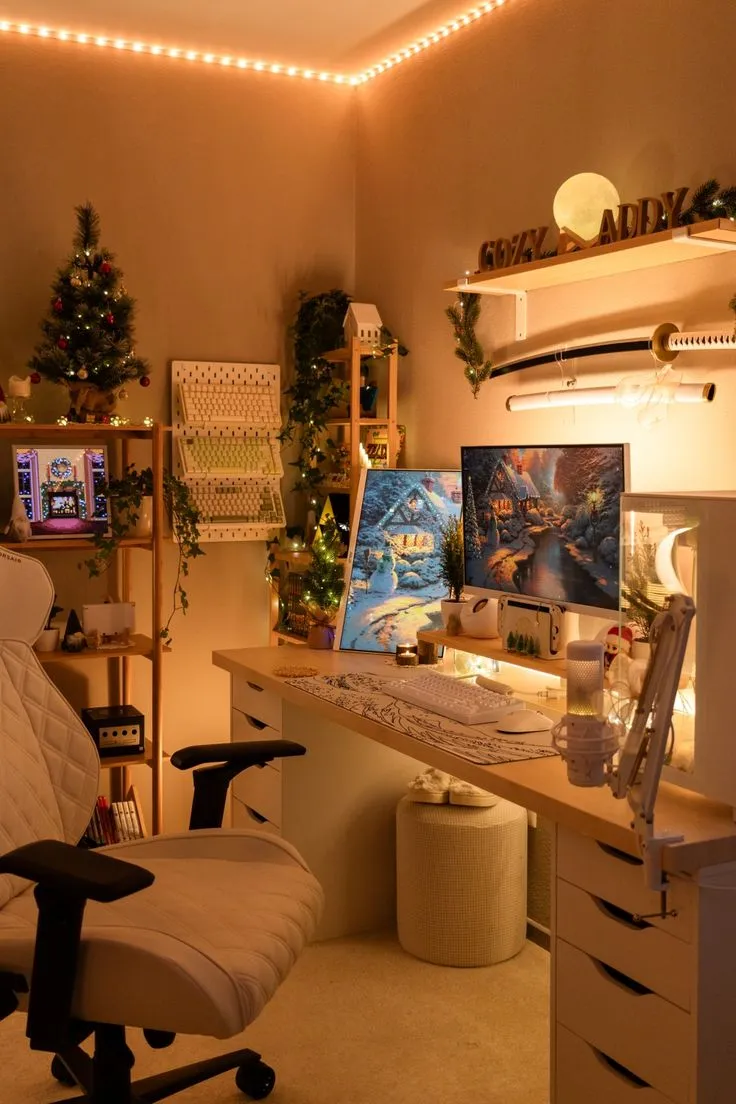
You sat down with a warm mug of hot chocolate, your favorite blanket draped over your lap, ready to unwind with a game that's basically digital comfort food. Two hours later, the mug is cold, the blanket has slipped onto the floor, and you're frantically cross-referencing three different fan wikis trying to figure out whether you missed a missable NPC dialogue line that locks you out of an ending you didn't even know existed.
Sound familiar? Welcome to what I've started calling the Cozy Game Paradox — and trust me, you are absolutely not alone.
The Promise vs. The Reality
Games like Spiritfarer, Unpacking, A Short Hike, and Cozy Grove are marketed — and genuinely designed — around the idea of low-stakes play. No death penalties. No ranked ladders. No sweaty opponents trying to grief you. The whole pitch is that you can just exist in these worlds at your own pace.
And yet. There's something about that exact design philosophy that flips a very specific switch in a certain kind of player's brain. The switch that whispers: but what if you did it perfectly?
It's not just anecdotal. Gaming communities across Reddit, Discord, and TikTok are full of players who describe logging genuinely stressful hours trying to 100% complete games that were supposed to be their antidote to stress. The irony is almost too on-the-nose.
Why Low Stakes Actually Raise the Bar
Here's the thing that game designers understand — and that psychologists have been talking about for years — about intrinsic vs. extrinsic motivation. When there's no external pressure (no leaderboard, no competitive ranking, no one watching your K/D ratio), your brain doesn't just relax. For a lot of players, it actually redirects that energy inward.
Without the fear of losing or falling behind, completionism stops being about survival and starts being about identity. You're not grinding the collectibles in Unpacking because someone's making you. You're doing it because some quiet part of your brain has decided that finishing it perfectly is a reflection of you — your thoroughness, your attention to detail, your commitment.
Game designers who work in the cozy space know this dynamic intimately. The best cozy games are built around what designers sometimes call "soft loops" — cycles of small tasks that deliver consistent, low-key dopamine hits without ever demanding too much. The genius (and the trap) is that these loops are just open-ended enough that your brain keeps generating its own goals to fill the space.
In Spiritfarer, for instance, the game never tells you to max out every character's relationship before they pass on. But players do it anyway, often spending hours they didn't plan to spend because the emotional stakes they've invented for themselves feel completely real.
The Completionist Spiral Explained
There's a specific psychological mechanism at play here that's worth naming: the Zeigarnik Effect. It's the well-documented tendency for humans to fixate on unfinished tasks far more intensely than completed ones. Your brain essentially keeps an open tab for anything left undone, and it doesn't close that tab just because the task is optional.
Cozy games are, almost by definition, full of optional content. Side quests that don't affect the main story. Collectibles tucked into corners. Friendship meters that cap at levels you didn't know existed. Every one of those optional elements is an open tab your brain quietly refuses to close.
And because cozy games tend to be good — genuinely warm, emotionally resonant, carefully crafted — players form real attachments to the worlds and characters. Walking away from an incomplete save file in Cozy Grove doesn't feel like abandoning a game. It feels, somehow, like abandoning the spirits you promised to help. That emotional texture is part of what makes these games so special. It's also exactly what makes it so hard to just... stop.
The Community Multiplier Effect
Here's another layer that doesn't get talked about enough: the cozy gaming community is incredibly active online, and that community energy feeds the completionist spiral in ways that feel totally organic.
When you pop into a Stardew Valley subreddit to ask one innocent question about fish pond capacity, you're suddenly exposed to posts about optimal farm layouts, rare item drop rates, and speed-run strategies that somehow make the game feel simultaneously more relaxing and more complex than you'd realized. The community doesn't intend to stress you out — everyone's enthusiastic and genuinely helpful — but the sheer depth of shared knowledge makes the game feel like it has more layers than you initially appreciated.
That discovery is exciting. And exciting things, it turns out, are not always relaxing.
So Is This a Problem?
Honestly? Not really — at least not inherently. The fact that a cozy game can hold your attention for 80+ hours isn't a design flaw. It's a testament to how well-crafted these experiences are. The designers who build these worlds want you to fall in love with them. The completionist spiral is, in many ways, just love expressed in spreadsheet form.
The only time it tips into something worth examining is when the anxiety of incompletion starts to outweigh the joy of play. If you're genuinely stressed about your Cozy Grove daily tasks or losing sleep over a wiki rabbit hole, that's worth noticing — not because there's something wrong with you, but because it's a good reminder that even the most thoughtfully designed game is still a game.
The blanket's still on the floor. The hot chocolate is definitely cold now. But you know what? You found that hidden dialogue line, you understand the crop rotation, and honestly? That feels kind of great.
Embrace the Chaos (Warmly)
At SnowCait, we've always believed that cozy gaming is about more than just slowing down — it's about finding the kind of engagement that actually fits your brain. And for a lot of us, that engagement comes wrapped in a contradiction: a deeply relaxing game that somehow makes us the most focused, detail-obsessed version of ourselves.
Maybe the real cozy game paradox isn't that these games stress us out. Maybe it's that they show us a version of focus and dedication that we actually enjoy — one that doesn't feel like pressure because it's entirely self-directed, wrapped in pixel-art sunsets and lo-fi soundtracks.
Now close the wiki. Or don't. We're not judging. But maybe make a fresh cup of something warm first.